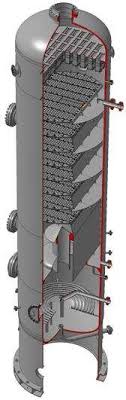
Separators
In oil, gas, and petrochemical industries, production fluids are typically mixtures of crude oil, natural gas, water, and impurities. Separators are equipment that separate these components based on density differences, physical state, and flow behavior. Proper operation of separators plays a key role in final product quality, equipment safety, and process efficiency.
Types of Separators by Application
1. Gas-Liquid Separator:
- Function: Separates gas from liquids (oil and water)
- Application: At the beginning of the process to prevent liquids from entering gas equipment
- Design: Vertical or horizontal, equipped with Demister Pad
2. Three-Phase Separator (Oil-Gas-Water):
- Function: Simultaneous separation of oil, gas, and water
- Application: Oil production units (GOSP)
- Design: Usually horizontal to increase residence time and ease of separation
3. Two-Phase Separator:
- Function: Separates gas from liquid or liquid from liquid
- Example: Gas separation from oil in wellheads or primary processing units
4. Liquid-Liquid Separator:
- Function: Separates two immiscible liquids (e.g. oil and produced water)
- Application: Water and crude oil treatment units
5. Cyclone Separators:
- Operation: Based on centrifugal force
- Function: Removal of liquid droplets from gas flow or separation of solid particles
- Advantages: Small size, high speed
- Disadvantages: Lower efficiency compared to gravity separators